
motion-pages — a Claude Code skill for award-site motion



Immersive Three.js worlds, liquid-glass shader typography, springy poster walls — single-file pages, screenshot-verified.
🌐 Showcase: https://motion-pages.pages.dev (mirror: https://jiangyurong609.github.io/motion-pages/)
On the showcase you can:
- ▶ Run every demo inline — each gallery card plays its world right in the grid;
- 🎛 Use the Playground — type a brand name + tagline, pick a palette hue and an archetype (glass product / particle morph / liquid glass), and watch a live world rebuild as you type — then copy a prompt that carries your exact brand, palette, and archetype into Claude Code;
- ⧉ Copy full build-spec prompts — not one-liners: each example's prompt pins the
layer stack, palette values, geometry parameters, shader math, timings, responsive
rules, and the self-verify recipe (they live in
docs/prompts/); - 🔎 Clone the feel of any site — a prompt template that has the agent browse a reference URL, storyboard it at several scroll depths, map its motion patterns to the skill's recipes, and rebuild that motion language as original code for your brand;
- 🤖 Hand it to any agent —
llms.txtlinks the full skill and every live example for AI agents outside Claude Code.
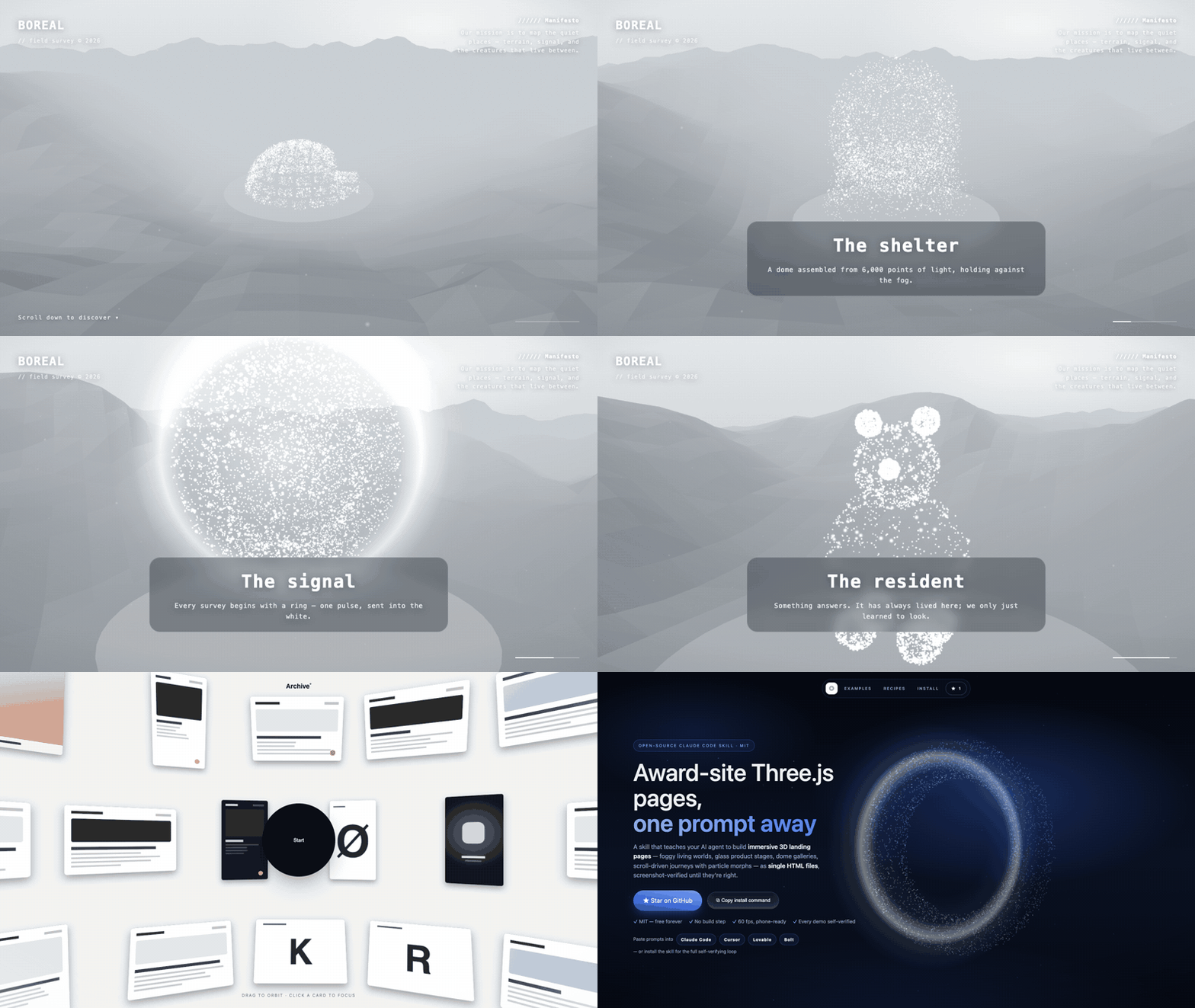
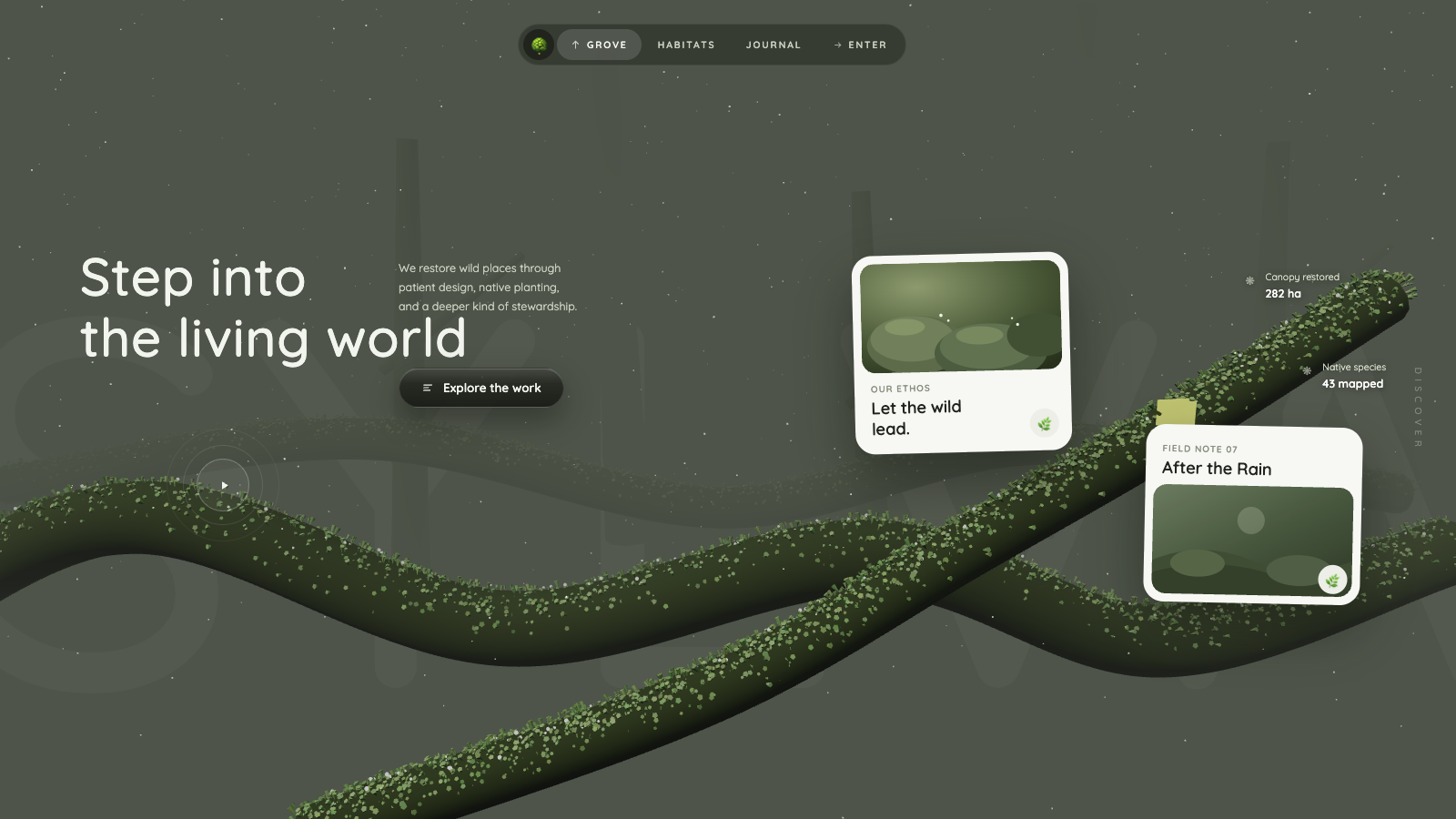
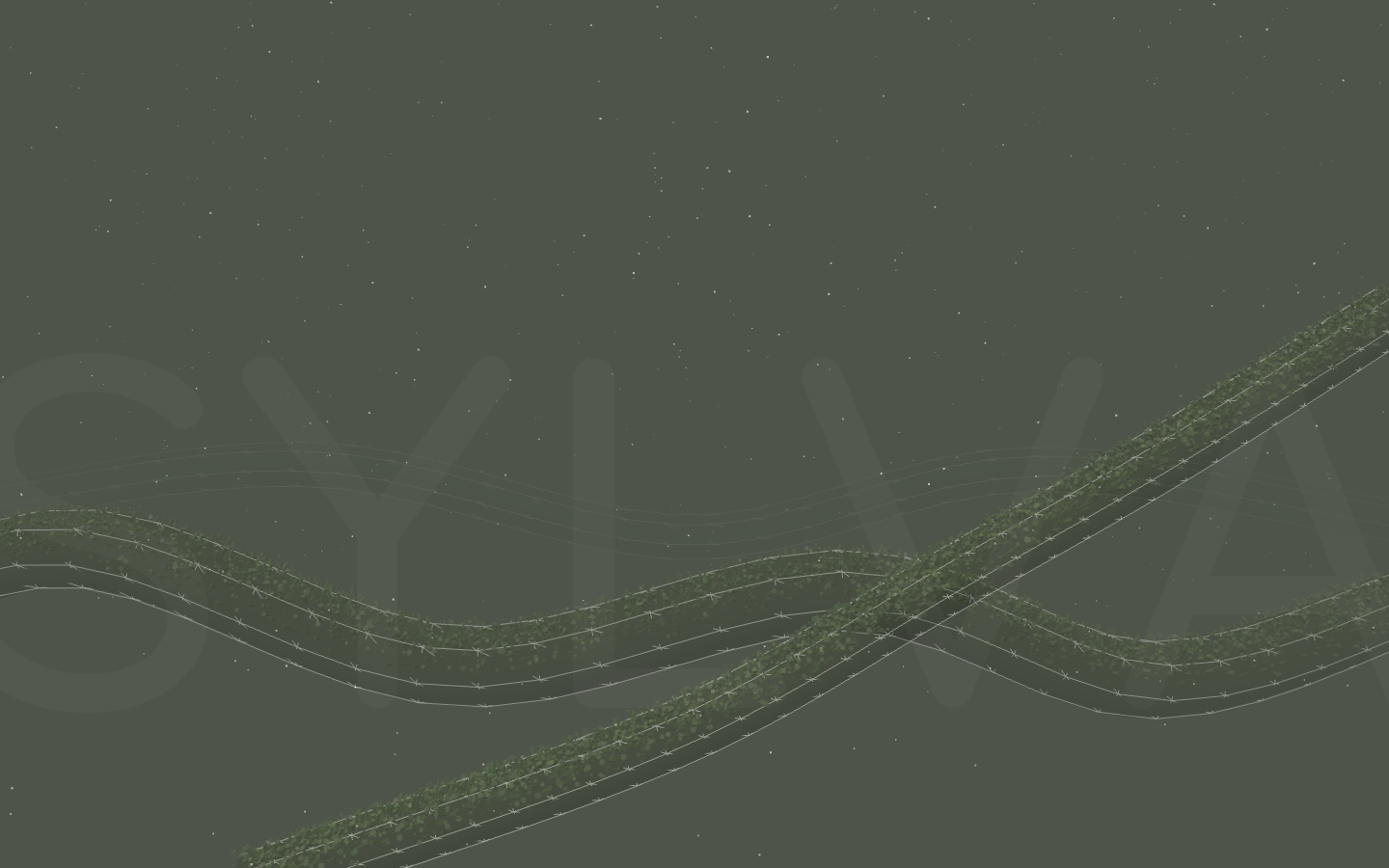
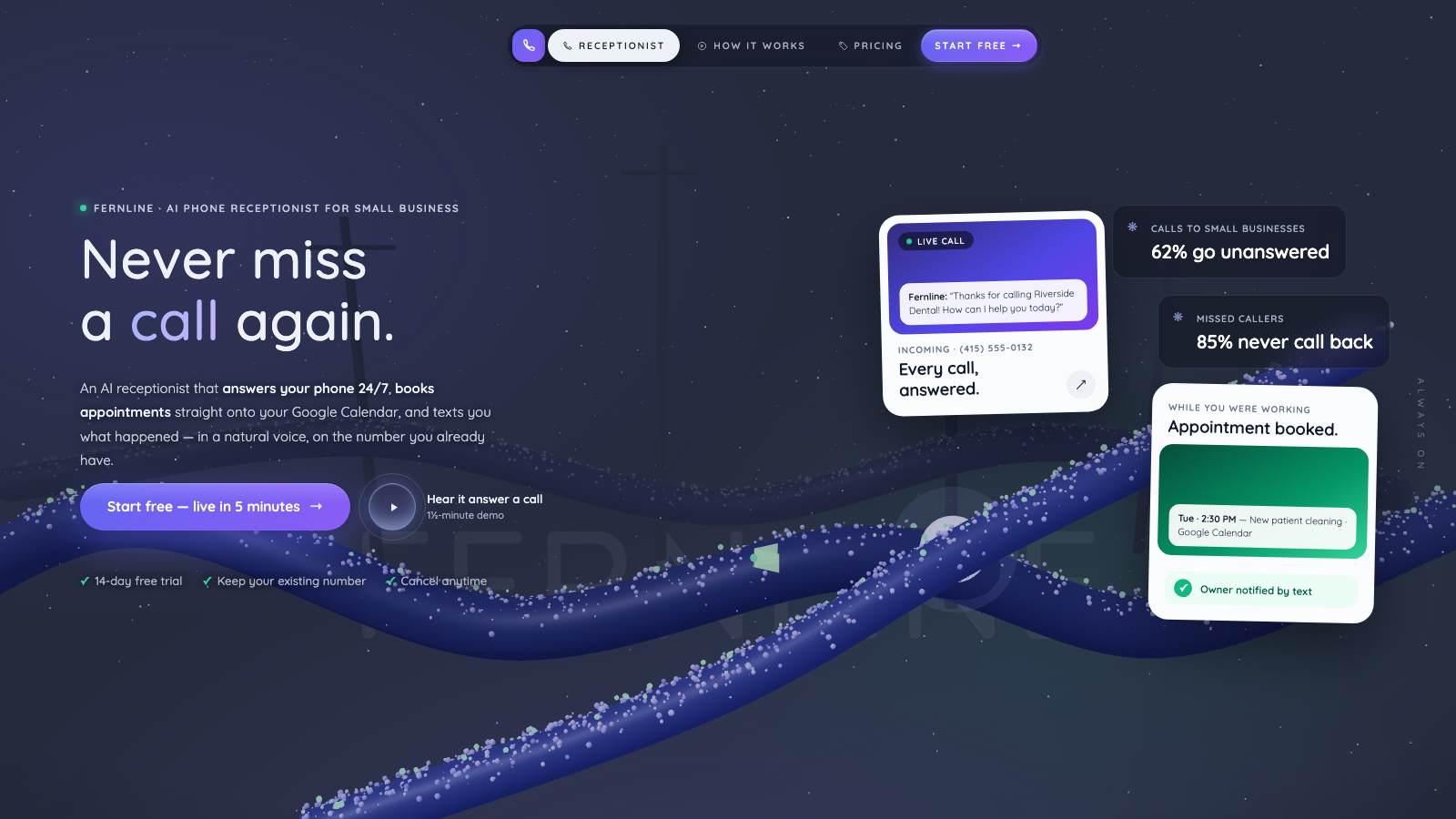
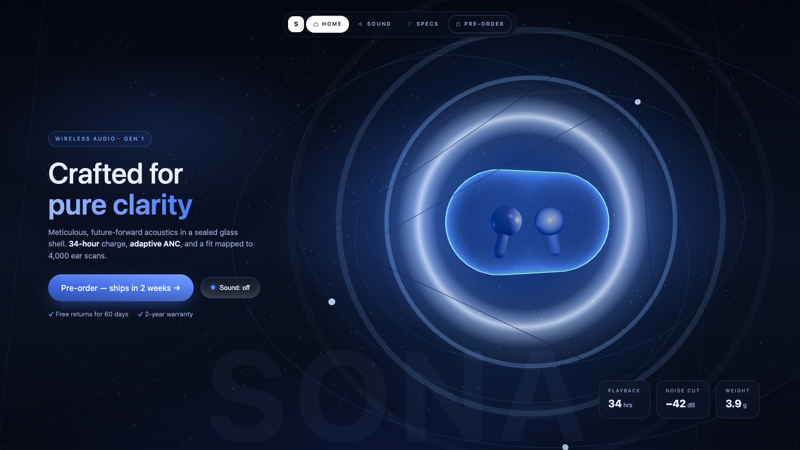
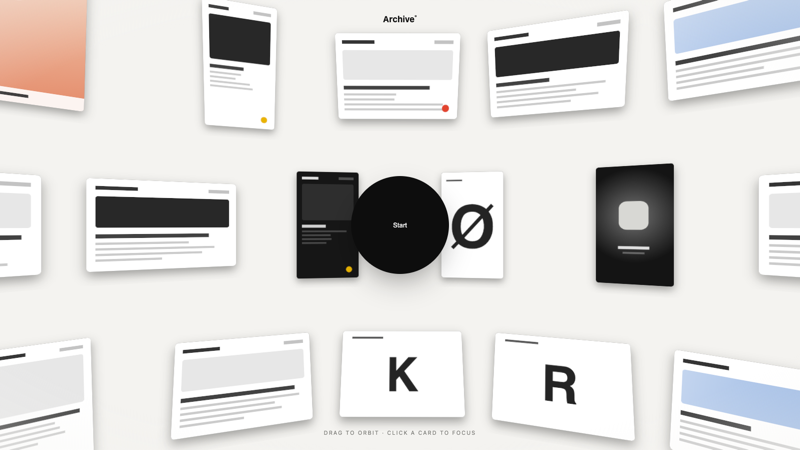
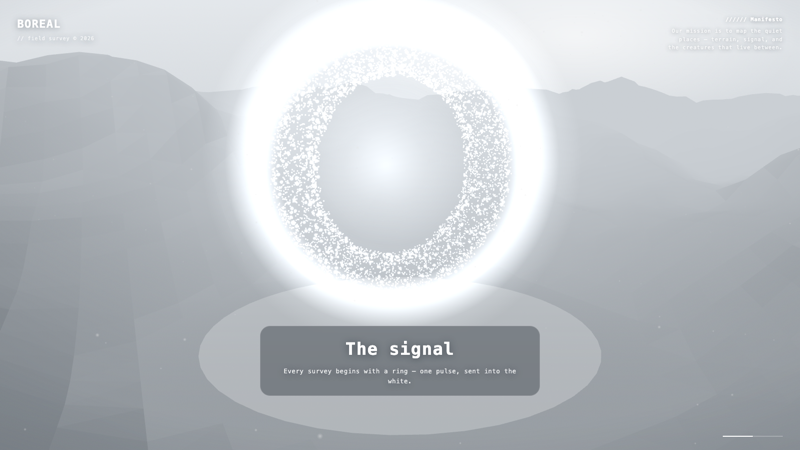
A Claude Code skill that teaches the agent to build award-site-style immersive Three.js pages as a single HTML file (+ a vendored three.js): the Sylva-style foggy hero (organic geometry, crisp DOM overlay UI, mouse-orbit parallax, pointer particles, Death-Stranding wireframe scan intro, glass cards, a living creature) plus four more archetypes distilled from award-winning sites — a glass product stage with sonar rings (AETHER:1-style), a drag-orbit dome gallery with click-to-focus camera flights (OpenPurpose-style), scroll-driven camera journeys with particle shape morphs (Igloo-Inc-style), and recipes for cursor mask reveals (Lando Norris), paper poster walls (MISC), and webcam gesture control — all with no build step, responsive down to phones, touch- and reduced-motion-aware, verified via a multi-viewport headless-Chrome screenshot loop plus a design-review (aesthetic + conversion) pass, so the result is ready to mount in a production webapp on day 1.
| Sylva replica (bundled example) | Wireframe scan intro | Applied to a real brand |
|---|---|---|
 |
 |
 |
| Glass product stage | Dome gallery | Scroll journey + particle morph |
|---|---|---|
 |
 |
 |
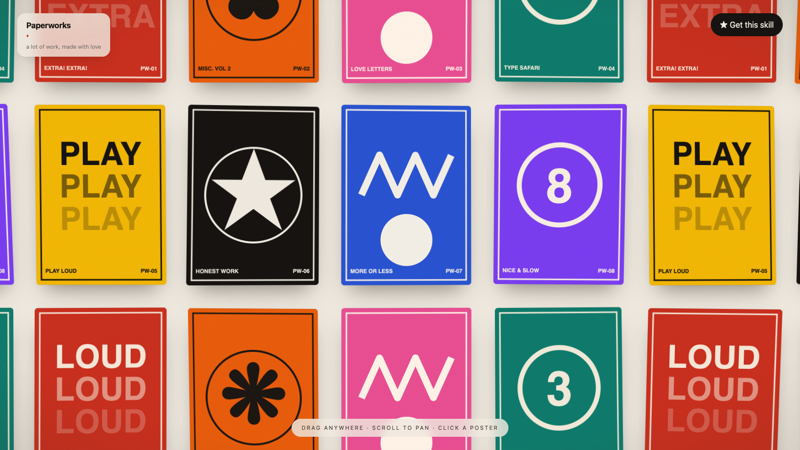
| Liquid-glass typography (raw WebGL) | Springy poster wall (pure DOM) |
|---|---|
 |
 |
Install
In Claude Code, two commands:
/plugin marketplace add jiangyurong609/motion-pages
/plugin install motion-pages@motion-pages
Or copy the skill in manually (works for forks and offline machines):
git clone https://github.com/jiangyurong609/motion-pages.git
cp -r motion-pages/motion-pages ~/.claude/skills/
Then in Claude Code, prompts like these will route through the skill:
- "Build me a 3D landing page for my brand, orbit using the mouse, add particles to pointer"
- "Build a liquid-glass hero — the headline ripples under the cursor"
- "Make a draggable poster wall where the posters flex like paper"
- "Clone the feel of
<URL>for my brand — rebuild its motion language as original code" - "Give the hero a wireframe intro like the field-scanning effect in Death Stranding"
- "Add a butterfly that lands on the branch and flies away on mouse-over"
Or skip prompt-writing entirely: grab a full build-spec prompt from the showcase gallery or generate a personalized one in the Playground.
What the skill encodes
- Architecture: 3 fixed layers — ghost brand wordmark (z0), transparent WebGL canvas (z1), DOM overlay UI (z2). Text is always DOM, never 3D.
- The one fog trick:
scene.fogcolor == page background color ⇒ infinite depth. - The transform trap: parallax, entrance animations, centering, and card tilt must
live on separate elements / separate CSS properties (
translate,rotate) or they silently clobber each other. - Time rules: intro driven by elapsed time (never accumulated per-frame deltas),
plus a
?stillURL mode so headless screenshots are deterministic. - Effect recipes: tube-geometry limbs + instanced fuzz (14k cones), pointer-biased particle drift, low-poly wireframe scan clones, scan-line card reveals, creature state machine (fly → rest → flee), traveling pulses.
- Self-verify loop: headless Chrome + SwiftShader screenshots at desktop, tablet,
and phone sizes; how to catch silent JS/shader failures; and the headless traps that
fake failures (
--disable-gpukills WebGL, Chrome's ~500px minimum window width silently crops narrow shots — use an iframe harness for true phone renders). - Design-review pass: after the technical loop, re-read the still as a principal designer + CRO lead — value scan test, CTA squint test, trust-line adjacency, no dead micro-text, wordmark integrity, visible light, intro ≤ ~2.5 s, and a click- through audit of every link/button (honest labels, real destinations).
- Production loading: vendored
three.module.jswith local-first import + CDN fallback (never blank-void on a slow CDN, never dead onfile://CORS), UI reveal keyed to the first rendered frame with a plain-script failsafe. - Responsive + touch: phone/tablet breakpoints (single-column phone layout with
one peeking card), idle camera drift for pointer-less touch devices,
prefers-reduced-motionsupport. - Fluid UI layer: Meng-To-style shader buttons (glass gradient + idle specular sweep + cursor-following light + hover bloom), cursor-lit nav glass, card lift with tilt-flatten and art zoom, rippling play rings, an expo-out easing system — pure CSS + ~10 lines of JS, with the stagger-delay trap and still-mode/reduced-motion guards documented.
- Expanded archetypes: glass product stage (fake-glass shells —
transmissionis an opaque-gray trap under SwiftShader — sonar rings, orbital arcs, audio-reactive toggle), dome media gallery (density rules, seeded canvas thumbnails, drag-vs-click disambiguation, raycast fly-to-focus), scroll-driven camera rails (smoothed scrub, clearing-vs-terrain rule, caption scrims), multi-target particle morphs (stagger + mid-flight scatter), cursor mask reveals, paper poster walls, gesture control. - The fake-bloom kit: baked canvas glow sprites (never bare square
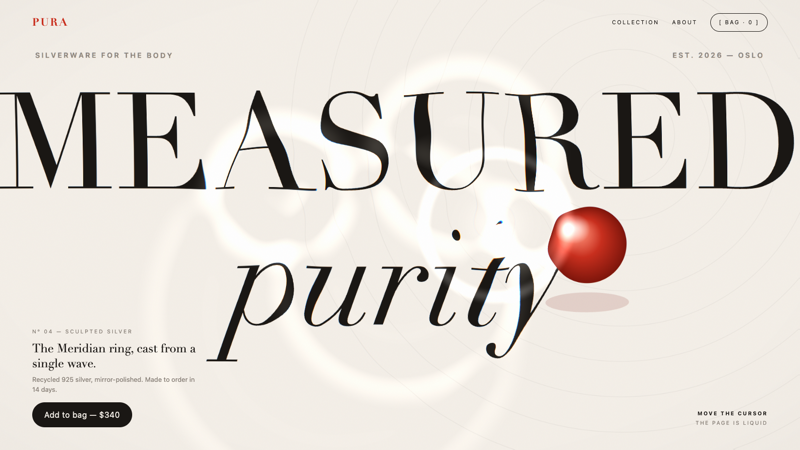
Points), a halo-ring gradient texture that IS the bloom, fresnel-edge glass shaders instead oftransmission, sparkle sub-clouds, film grain — award-site light with no post-processing, rendering even under headless SwiftShader. - Motion beyond Three.js: raw-WebGL liquid-glass ripple typography (analytic ripples, no FBO sim — survives old GPUs) and pure-DOM springy poster walls (bend from drag lag, per-poster spring stiffness) — same architecture, no 3D library.
- Study-a-reference workflow: given a URL — storyboard it at several scroll depths, grep its script bundles for tech signals, map what you see to the recipe catalog, rebuild the motion language as original code for the user's brand (never copying the reference's code, assets, or content).
- Forcing params for verification: any state only user input can reach gets a
query param that pins it (
?still,?p=0.5,?focus=40) so every keyframe and interaction is a plain headless screenshot. - Ship checklist: mounting into a real app — static assets, verified routes and anchors, meta/OG, a11y, perf sanity.
Runtime tooling
Zero-dependency (Node ≥22 + Chrome), lives in scripts/:
node scripts/audit.mjs mypage.html         # design lint: ~22 rules × 3 viewports
node scripts/audit.mjs mypage.html --json  # exit 1 on blockers → CI pre-deploy gate
The audit makes the skill's review passes executable: AI-slop tells (Inter display
type, blue-purple gradient text, default ease .2s…), easing grammar, reduced-motion
handling, the stagger-delay hover-lag trap, console errors, blank-frame and
canvas-alive pixel checks, rendered text contrast, phone overflow, tap targets,
?still=1 determinism, a11y names. All nine bundled demos pass it.
scripts/picker.js is the live loop: paste it into the DevTools
console on your page, click an element, and a precise context block (selector +
markup + computed styles) lands on your clipboard — paste it to your agent and the
skill answers with 3 genuinely distinct variants and waits for your pick.
Bundled examples
motion-pages/examples/sylva-replica.html— replica study of the original nature scene (open it in a browser, move the mouse, hover the butterfly).motion-pages/examples/fernline-hero.html— the same recipe re-themed for a SaaS brand (Fernline, a fictional AI phone receptionist): the mossy branches become glowing call-wires, the butterfly becomes a message spark, call pulses flow into a receptionist orb. This one shows the full production treatment — conversion- first hero column, working demo modal, glass stat chips, atmosphere + vignette, phone/tablet layouts, touch idle-drift, reduced-motion support.motion-pages/examples/sona-product-hero.html— glass product stage (studied from the AETHER:1 earbuds site): a fake-glass capsule (notransmission— it renders opaque under SwiftShader) with glowing buds inside, thin additive sonar ring pulses, tilted orbital arcs with traveling dots, a wireframe geodesic backdrop, and a working WebAudio sound toggle that makes the rings react. Product sits beside the copy on desktop, floats above it on phones.motion-pages/examples/dome-gallery.html— drag-orbit dome gallery (studied from OpenPurpose®): ~100 canvas-generated site thumbnails on the inside of a sphere, inertial drag, click a card and the camera flies to it while the rest dim (Esc / "Back to dome" returns). Try?focus=40to jump straight to a focused card.motion-pages/examples/boreal-journey.html— scroll-driven camera journey + particle morphs (studied from Igloo Inc): scrolling scrubs the camera along a spline over foggy noise terrain while a 6k-point cloud morphs dome → ring portal → particle creature, with per-segment captions. Try?p=0.5or?p=0.95to pin any point of the journey.motion-pages/examples/pura-liquid-hero.html— liquid-glass ripple typography (no three.js — raw WebGL): a fragment shader turns the whole editorial page liquid; cursor ripples, a glass lens, and chromatic aberration warp giant serif type painted on an offscreen canvas.motion-pages/examples/paperworks-posterwall.html— springy draggable poster wall (no WebGL at all): an infinite wrapped grid of canvas-painted posters that flex like paper — spring tilts driven by drag lag, momentum, click-to-enlarge modal.motion-pages/examples/volera-morph.html— particle shape morph (the standalone archetype): 6k seeded glow particles dissolve between a soaring crane (parametric wing sweeps), a quantized V-formation and a moon-gate ring — per-particle stagger plus mid-flight scatter is what makes it read as dissolution, and the cursor repels the flock locally.motion-pages/examples/tempo-easing.html— the easing grammar, interactive (pure DOM, zero requests): five curves × five jobs as replayable exhibit cards — entrances ease-out, exits ease-in, moves ease-in-out, loops linear, one signature overshoot — with a CTA that copies the whole curve set. The page demonstrates the grammar on itself.
Verify any file locally:
CHROME="/Applications/Google Chrome.app/Contents/MacOS/Google Chrome"
"$CHROME" --headless=new --enable-unsafe-swiftshader --window-size=1440,900 \
  --screenshot=out.png --virtual-time-budget=8000 \
  "file://$PWD/motion-pages/examples/sylva-replica.html?still"
Contributing
New archetypes welcome — a recipe section in SKILL.md + a single-file demo + a build-spec prompt + a passing audit, as a set. See CONTRIBUTING.md.
Credits
- The expanded archetypes are original-code studies of interaction patterns seen on the AETHER:1 earbuds concept, OpenPurpose®, Igloo Inc (Awwwards Site of the Year), the official Lando Norris site, MISC, and the ITOM sketch portfolio — no code or assets were taken from any of them; the Fernline / SONA / Archive° / BOREAL brands are fictional.
- Built and verified with Claude Code.
License
MIT — see LICENSE. The Sylva visual design belongs to its original author; the replica is included as an educational study.
No comments yet
Be the first to share your take.